(See below for Japanese version. 日本語版は下記をご覧ください。)
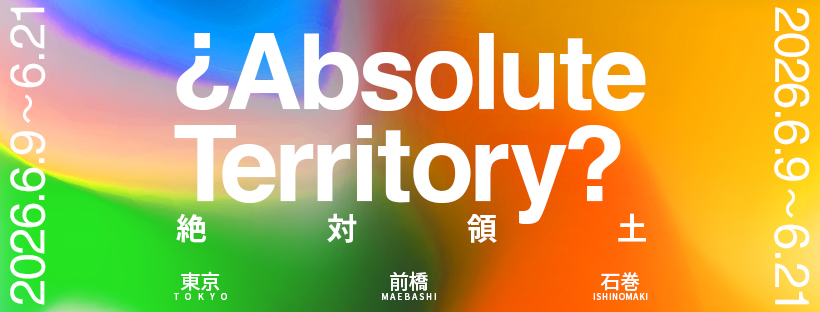
¿Absolute Territory?
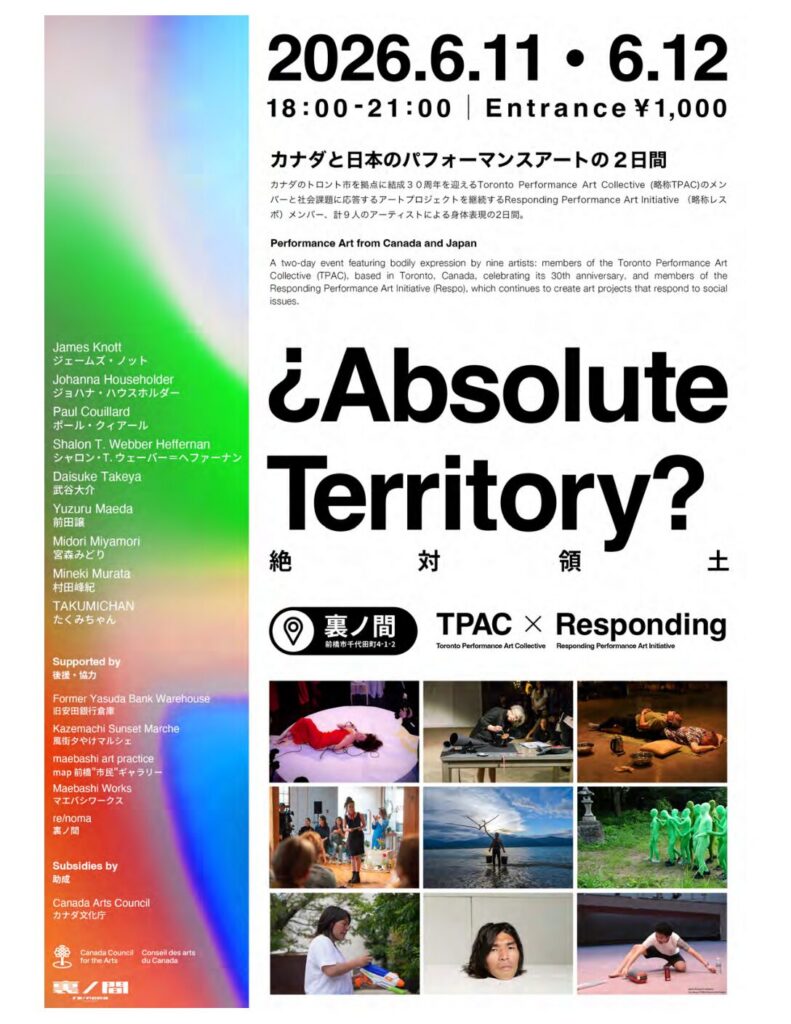
Thursday June 11 – Friday June 12 6pm
Maebashi|re/noma, 4-1-2 Chiyoda-cho, Maebashi City, Gunma Prefecture
Day 1
Mineki Murata, drawing 6.11.2026
Midori Miyamori, Central centre, the place closest to universe
Yuzuru Maeda, Crustaceanism
James Knott, A Vanishing Trace
Day 2
TAKUMICHAN, Kizuna: the bonds
Kiera Boult, Strong Zero
Paul Couillard, dusk
Daisuke Takeya, Maebashi: A toast and a requiem for futile effort
Johanna Householder, Clearing the Air
A two-day event featuring bodily expression by artists from Canada and Japan: members of the Toronto Performance Art Collective (TPAC), based in Toronto, Canada, celebrating its 30th anniversary, and members of the Responding Performance Art Initiative (Respo), which continues to create art projects that respond to social issues.
“Diversity refers to the coexistence of people with different characteristics and attributes—such as gender, age, nationality, race, disability status, sexual orientation, values, and neurodiversity—within a single group, respecting and acknowledging each other’s differences. When we view the existence of an individual as a “territory (as a land, in Japanese ‘Ryuoudo’)” and respect it, can it become something absolute, liberated from the constraints of the environment? “Absolute Territory” (an unfamiliar expression in English) can be translated to Japanese as “Zettai Ryouiki” (absolute domain). “Zettai Ryouiki” is a slang term and MOE term meaning “a sacred domain that no one can invade,” referring to the area of bare thigh skin exposed between a miniskirt or shorts and knee-high socks. But is anybody able to resist invasion?
“The global environment is currently undergoing significant changes, and we see nothing but destabilizing elements such as war and division. In such circumstances, those in power around the world frequently use the word “absolute.” What kind of bias is hidden in the idea of “absolute” as it is used in these completely different contexts? By using strong words like “absolute” and “territory” to describe a multicultural society that is constantly changing organically, is it paradoxical to consider the nature of the permeable body? We hope to provide an opportunity to think about this paradox through performance art.”
Daisuke Takeya
Polymorphous Translation (Responding8 Maebashi review by Maron Shibukawa)
絶対領土
Thursday June 11 – Friday June 12 6pm
前橋、裏ノ間 群馬県前橋市千代田町4−1−2
1日目
村田峰紀 [Mineki Murata], drawing 6.11.2026
宮森みどり [Midori Miyamori], Central centre, the place closest to universe
前田穣 [Yuzuru Maeda], Crustaceanism
ジェームズ・ノット [James Knott], A Vanishing Trace
2日目
たくみちゃん [TAKUMICHAN], Kizuna: the bonds
キエラ・ボルト [Kiera Boult], Strong Zero
ポール・クィアール [Paul Couillard], dusk
武谷大介 [Daisuke Takeya], Maebashi: A toast and a requiem for futile effort
ジョハナ・ハウスホルダー [Johanna Householder], Clearing the Air
カナダと日本のパフォーマンスアートの2日間
カナダのトロント市を拠点に結成30周年を迎えるToronto Performance Art Collective (略称TPAC)のメンバーと社会課題に応答するアートプロジェクトを継続するResponding Performance Art Initiative (略称レスポ)メンバー、計10人のアーティストによる身体表現の2日間。
多様性(ダイバーシティ)とは、性別、年齢、国籍、人種、障がいの有無、性的指向、価値観、働き方など、異なる特徴や属性を持つ人々が、ひとつの集団の中に共存し、それぞれの違いを互いに尊重し、認め合うことを指します。一人の人間の存在を「領土」として捉えてリスペクトするとき、周囲からの束縛から解放された絶対的なものになり得るでしょうか?「絶対領土」とは(聞きなれない言い回しですが)、英訳すると「Absolute Territory」となり、それを再度和訳すると「絶対領域」となります。「絶対領域」とは、ミニスカートやショートパンツと、膝上丈のソックス(ニーハイソックス)の間に露出する、太ももの素肌部分を指す「何人にも侵されざる聖なる領域」という意味の俗語・萌え用語です。ところで、現在、世界環境は大きく変化し、戦争や分断が後を立たない不安定な要素ばかりを目にします。そのような状況にあって、世界の権力者たちもまた、「絶対」という言葉を多用しています。果たして、これら全く異なる文脈上で使用されている「絶対」に秘められている尺度には、どのような根拠があるのでしょうか?常に有機的に変化している多文化共生社会を「絶対」、「領土」という強い言葉を用いることで、いわば逆説的に、浸透性のある身体と有機的に変化してゆく多文化共生社会のあり方をパフォーマンスアートを通じて考える機会となれば幸いです。
武谷大介 [Daisuke Takeya]